
Perspective
The AI Stack Domino: Will it Continue?
CoreWeave is down 36% this month. Nvidia is down 13% from its high. The S&P 500 is near a record. These are not the same trade. Understanding which tier you're exposed to — credit crisis, valuation reset, or rotation — is what matters right now.
Lakespring Investments
Founder & Principal, Lakespring Investments
October 27, 2026
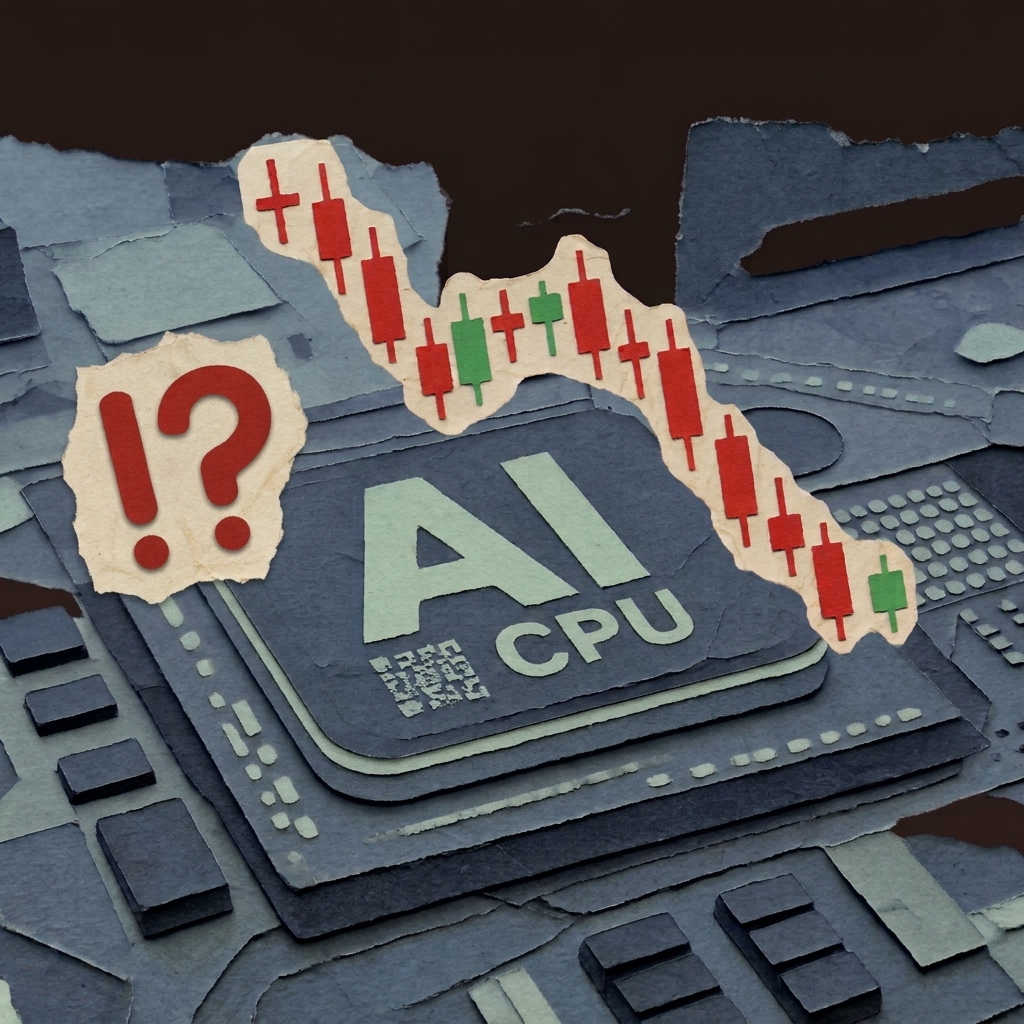
CoreWeave is down 36% this month. Nvidia is down 13% from its high. The S&P 500 is near a record. These are not the same trade, and treating them as one is the mistake most investors are making right now.
There is a conversation happening across every financial podcast, every trading desk, and every investor group chat right now: is the AI trade over? The neocloud stocks — CoreWeave, Nebius, IREN — have been decimated in Oct. The semiconductor names — Nvidia, Broadcom, Micron — are in correction. The hyperscalers — Amazon, Microsoft, Alphabet, Meta — are pulling back from all-time highs while the S&P 500 sits near 7,650, close to a record.
The instinct is to lump all of this together and call it one thing: the AI bubble bursting. That instinct is wrong — and acting on it will cause you to either sell too early on the names that will recover, or hold too long on the names that will not. What is actually happening is a domino effect playing out across three tiers of the AI infrastructure chain, each impacted to a different degree and for different reasons. Understanding which tier you are exposed to — and why — is the only thing that matters right now.
The Trigger: A Credit Event, Not a Sentiment Correction
The selloff did not start in the equity market. It started in the bond market — and that distinction is critical.
On Oct 14, investor Chamath Palihapitiya shared a chart showing CoreWeave's unsecured bond yield at approximately 15%, warning of a private credit bubble forming around AI infrastructure. Over the following ten days, CoreWeave's credit-default swap spreads climbed above 1,162 basis points — a level generally associated with financial distress. To put that in practical terms: it now costs roughly $1.1 million annually to insure $10 million of CoreWeave's debt against default.
The credit stress jumped from CoreWeave's bonds to CoreWeave's stock, then to Nebius and IREN, and then to the broader semiconductor and AI infrastructure complex. By Oct 22, a broad AI-led tech selloff hit markets: CoreWeave fell 9.25% in a single session, Nebius dropped 8.6%, IREN lost 10.2%, and Nvidia declined 4%. On Oct 25, Elon Musk added fuel to the fire, warning that more than 200 neocloud companies face "guppy-level death" as debt markets shut off financing for businesses without substantial revenue independent of AI data centres.
This sequence matters. Sentiment-driven selloffs are recoverable — investors get scared, prices overshoot to the downside, and the fundamentals eventually reassert themselves. Credit-driven selloffs are structural — they reflect lenders reassessing the probability that borrowers can repay their obligations, and they do not reverse simply because investor sentiment improves. What began in CoreWeave's bond market is now repricing an entire tier of the AI infrastructure stack. Whether it stays contained to that tier is the question that will define the next six months.
Tier 1: The Neoclouds — A Business Model Stress Test
CoreWeave, Nebius, and IREN represent the most vulnerable layer of the AI infrastructure chain. Their business model is straightforward: borrow money, buy GPUs, install them in data centres, and rent compute capacity to AI companies and enterprises. When demand is rising, credit is available, and GPU utilisation is high, the model generates attractive returns. When any of those three conditions weakens, the model breaks — because the debt obligations are fixed while the revenue is not.
All three conditions are now under stress simultaneously.
CoreWeave's market capitalisation has fallen from a peak near $90 billion to approximately $31 billion. Its unsecured bonds yield close to 16%. Its three co-founders have sold over $3.3 billion in shares since the Mar 2025 IPO, including $2.4 billion in 2026 alone. Gartner has projected that 80% of neocloud companies will not survive independently by 2030 — they will either be acquired, consolidated, or shut down. Nebius is down approximately 29% in Oct despite its CEO distancing the company from CoreWeave's debt profile. IREN has lost 46%.
The structural problem is not that demand for GPUs has collapsed — it has not. The problem is that the intermediaries who financed GPU purchases with debt are now discovering that their customers are not generating enough revenue to justify the rental economics at scale. The AI debate is shifting from demand growth to funding durability. Strong usage and ambitious construction plans are insufficient if companies cannot finance them on terms that preserve shareholder value.
There is a nuance that the bull case consistently misses. The argument that tighter financing imposes healthy discipline on the AI buildout — killing marginal projects and preventing excess — sounds reasonable in theory. In practice, credit crunches do not discriminate. The contagion spreading from CoreWeave to Nebius to IREN is not disciplined capital allocation. It is panic — and it is repricing an entire business model category regardless of individual company fundamentals.
There is a related concern that deserves more attention than it is getting: GPU depreciation may not align with debt maturity. If next-generation chips make current hardware economically obsolete faster than the debt used to finance that hardware is repaid, the collateral backing these loans degrades over time. The counterargument is that older-generation chips still command meaningful rental rates — which is true today but may not hold if supply continues to expand while token prices fall. The resolution of that tension will determine which neoclouds survive and which do not.
For investors in this tier, the question is not whether AI demand is real. It is whether debt-funded GPU rental is a viable long-term business model when the cost of capital is rising, the collateral is depreciating, and the largest customers (hyperscalers) are building their own capacity. The answer, for most (but not all) of the 200+ companies Musk referenced, is probably not.
Tier 2: The Picks and Shovels — A Valuation Reset, Not a Business Crisis
Nvidia is down approximately 13% from its Oct 6 all-time high. Broadcom is down 30% from its Jun peak. Micron is 25% below its record. These are meaningful drawdowns — but the drivers are different from what is happening in the neoclouds.
The picks-and-shovels companies — the chipmakers, memory providers, and networking equipment suppliers — are selling the infrastructure that the entire AI ecosystem depends on. Their revenue is real, their margins are expanding, and their products are in genuine supply-constrained demand. Nvidia generated $215.9 billion in revenue in fiscal 2026 with 53% net margins. Micron's revenue grew 379% year-over-year last quarter. Broadcom's AI-related revenue grew 85.5%. FactSet identified Nvidia and Micron as the two single largest contributors to S&P 500 earnings growth in Q3 2026 — without them, the index's blended growth rate would drop from 29% to 20%.
The selloff in this tier is not about broken fundamentals. It is about three forces converging: rising bond yields making high-multiple growth stocks relatively less attractive, contagion from the neocloud credit crisis bleeding into the broader semiconductor complex, and profit-taking after a multi-year rally that saw Micron rise 697% in twelve months.
The bull thesis applies most cleanly to this tier. The argument that supply bottlenecks prove demand exceeds capacity, that investor positioning reflects capitulation, and that historical tech cycles include severe mid-cycle corrections before further gains — all of this is most defensible when applied to Nvidia, Broadcom, and Micron. These companies are not going bankrupt. They are not facing credit crises. They are facing a valuation reset driven by macro forces and guilt-by-association with the neocloud meltdown.
The risk in this tier is CapEx cyclicality. If the hyperscalers slow their infrastructure spending — because returns are not materialising fast enough, because credit markets tighten further, or because macro conditions deteriorate — the demand for chips and memory decelerates, and revenue growth that the market is pricing at 30x earnings may not sustain that multiple. The bulls point to memory supply constraints and Jensen Huang's demand commentary as evidence that the cycle has further to run. The bears counter by noting that semiconductor equipment stocks like Lam Research and Applied Materials are already weakening, which may signal that demand expectations were pulled forward too aggressively.
My own view: the buildout lag is where the opportunity lives. We are still in the phase where CapEx is high and the broad earnings impact of AI has not yet shown up across the economy. That lag feeds the bear narrative. But once the infrastructure tips into scaling — once the deployment cost drops and AI proliferates across enterprise operations — the earnings impact will not be gradual. It will be a step function. The companies that own the infrastructure layer will capture that disproportionately. I remain long the picks-and-shovels names at these drawdowns because I believe the market is pricing the buildout cost without fully pricing the scaling returns.
Tier 3: The Hyperscalers — Rotation, Not Destruction
Amazon, Microsoft, Alphabet, and Meta have all pulled back from their 2026 highs. Nvidia and Tesla have corrected more sharply. Yet the S&P 500 sits near 7,650 — close to a record.
This is not a contradiction. It is rotation. Capital is not leaving equities — it is leaving former tech leaders and flowing into consumer staples, utilities, healthcare, defence, and energy. The index-level stability masks significant damage in the names that led the prior rally. Western Digital is down roughly 50% from its high. Broadcom is down 30%. These are not small moves. But they are invisible in the index because other sectors are absorbing the capital.
The hyperscalers themselves are in a different position from both the neoclouds and the picks-and-shovels names. AWS, Azure, GCP, and Meta's AI infrastructure are funded primarily by internally generated cash flow — not by debt issuance into a tightening credit market. The CapEx numbers are enormous ($660–$690 billion across the Big Four in 2026), but the revenue bases are equally enormous, and the diversification across cloud, advertising, subscriptions, and enterprise software provides resilience that a single-product neocloud cannot match.
Meta deserves specific attention here: negative free cash flow for the first time in approximately a decade, a new share class that facilitates capital raising while preserving Zuckerberg's voting control, and uncertainty about whether Muse AI adoption translates into infrastructure ROI. Meta's credit-default swap spread reached a record high near 117 basis points — not a distress reading, but a directional signal that lenders are reassessing risk for a company previously considered a strong borrower.
The hyperscaler correction is the most recoverable of the three tiers. These are companies generating hundreds of billions in annual revenue, expanding margins (Alphabet at 36.1% operating margin in Q1 2026, AWS at 35%), and sitting on cash reserves that dwarf the entire neocloud sector. A sentiment-driven selloff in the hyperscalers, driven by contagion from the neocloud credit crisis and rising bond yields, is a buying opportunity — provided you believe the AI demand thesis is intact over the next five years. I do.
The Real Risk: Continued Borrowing Strain Despite Lower Yields
There is one observation that neither the bull case nor the standard bear case adequately addresses: lower Treasury yields do not automatically help AI infrastructure borrowers. A company's borrowing cost is the risk-free rate plus its credit spread. If the 10-year Treasury drops from 5.35% to 5.0% but CoreWeave's CDS widens from 800 to 1,162 basis points, the net borrowing cost went up, not down. The rate-relief thesis that many bulls are relying on breaks when applied to the most leveraged players in the AI stack.
This is why the three-tier framework matters. Rate relief helps the hyperscalers (strong credit, low spreads) and the picks-and-shovels names (no debt-funded business model). It does not help the neoclouds whose spreads are widening faster than Treasuries are falling.
The broader risk — the one I wrote about in The Two AI "Bubbles" — is not that AI is a bubble. It is that the transition from buildout to scaling takes longer than the market expects, that macro headwinds (US debt surpassing $40 trillion, geopolitical tensions, 10-year yields near 5%) compress multiples before earnings catch up, and that the neocloud credit crisis triggers a liquidity event that cascades beyond its tier. Those are real risks. They are also risks attached to a secular growth story with a bumpy path — not to a speculative mania built on nothing.
The internet was not a bubble. Internet stocks were a bubble — for a period, in a specific set of companies, at a specific set of valuations. The AI infrastructure chain is now sorting itself into the companies that will survive the buildout and the companies that will not. That sorting process is painful, it is happening right now, and it will create generational buying opportunities for investors who understand which tier they are looking at.
For what it is worth, I remain bullish on the entire AI buildout — including the neoclouds — and I own most of these names. The technology is real, the demand is real, and the infrastructure is being built because it needs to be built. With midterm elections approaching, historical patterns are worth noting: the S&P 500 has risen in the 6–12 months following every midterm election since 1942, without exception. Combine that with year-end seasonality and the potential for rate relief, and the setup for a recovery into early 2027 is constructive.
That said, risk profile matters. If you are bullish on AI and want to capitalise on the drawdown, the hyperscaler and picks-and-shovels tiers offer material upside with meaningfully lower risk exposure than the neoclouds. Buying Nvidia at -13% or Alphabet at -10% gives you exposure to the AI buildout through companies with proven revenue, expanding margins, and self-funding balance sheets. Buying CoreWeave at -65% gives you exposure to a potential multi-bagger — but also to a business model that may not survive the credit cycle. The expected return may be higher, but the probability distribution is far wider. Both are legitimate trades. They are not the same trade. Know your risk tolerance, size accordingly, and understand which tier you are buying into.
The selloff across these three tiers is not based on one simple explanation — but they are all connected by a domino effect, each impacted to a varying degree. That is the price of admission for any participants in on the AI sweepstakes.
Disclaimer: This is not financial advice. I'm sharing my perspective on current market conditions. I hold positions in several of the companies discussed. Valuations can compress even when the thesis is correct. Do your own due diligence before making any investment decisions.